01
Mediclinic · 2024–
EHR Optimization Program
Streamlining clinical documentation, ordering, and workflows across a UAE network of hospitals and clinics.
Dr. Mohamed Abdulrazaq is a physician and clinical informatics leader based in Dubai. He spent years implementing EHRs across the GCC region as a vendor — and now leads clinical informatics, EHR transformation, and healthcare AI initiatives as Medical Informatics Director at Mediclinic Middle East.
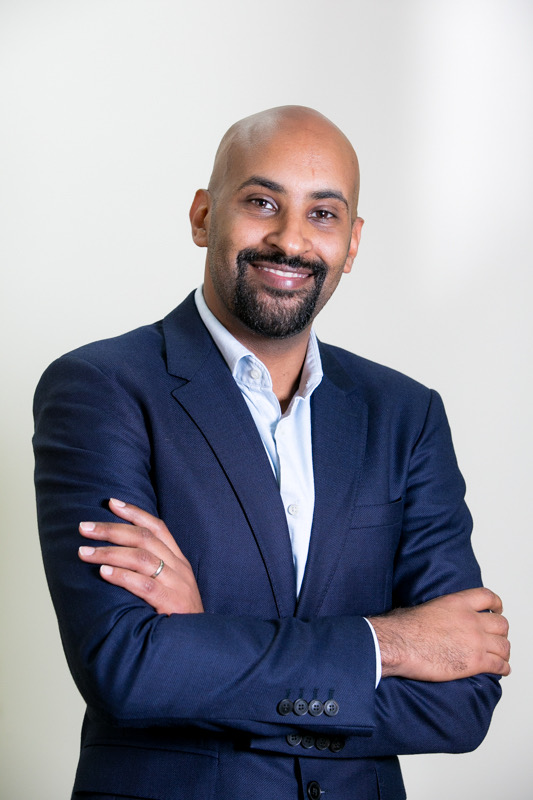
Dr. Mohamed Abdulrazaq is an experienced physician and clinical informatics leader spanning a nearly 20-year career. He began as a practicing physician in Bahrain, where he helped deliver one of the region’s first national electronic health systems in the Kingdom of Bahrain. Following that, he embarked on a clinical informatics career in which he worked on implementing EHRs with many private and government hospitals across the GCC region. Currently, he is the Medical Informatics Director at Mediclinic Middle East, one of the largest private healthcare groups in the region, with 6 tertiary hospitals and 28 clinics across the UAE.
Utilizing his clinical background, health informatics experience and passion for technology, he aims to improve and deliver better health outcomes efficiently.
His areas of interest and focus are the healthcare applications of AI technology, shifting from capturing clinical data to acting on it to improve clinical outcomes and patient safety, and reduce the burden on physicians.
A practical, experience-based set of capabilities built across implementation, leadership, and frontline medicine.
Leading large-scale clinical system implementation, optimization, and governance across complex hospital environments.
Mapping and redesigning frontline workflows so documentation and care fit the realities of clinical work.
Building clinician trust and engagement so new systems are genuinely used, not merely deployed.
Applying clinical AI pragmatically — grounded in workflow, safety, and measurable outcomes rather than hype.
Guiding hospitals and clinic networks through the operational change that digital care demands.
Deep understanding of public and private care delivery and country regulations around healthcare across the Gulf and wider region.
A specialized panel of clinical and health informatics leaders from across the Emirate. Established as part of the Department of Health – Abu Dhabi (DoH), the committee provides strategic guidance on the design, procedures, and technologies used by Malaffi.
Streamlining clinical documentation, ordering, and workflows across a UAE network of hospitals and clinics.
Led EHR implementation projects across a range of hospitals — private, government, greenfield builds, and EHR replacements.
Bringing AI tools that help clinicians spend more time with patients and less time documenting.
Moving early-warning risk models from concept into real clinical workflows and frontline use.
A side project pulling my own wearable data into a database turned into the clearest lesson I've had about clinical informatics.
Read →After twenty years of teaching clinicians to feed the record, the shift ahead is finally taking the burden back off them.
Read →For the last few years I've been quietly building something for myself: a personal health platform. Every night, data from my watch, my scale, and my training app flows into a PostgreSQL database running on a server at home. On top of it sits a scoring engine that reads the last day's signals — sleep, heart-rate variability, training load — and returns one thing: how ready I am to push, and how hard.
It now holds more than 1,400 days of my own data. Building it taught me something I'd half-known professionally but had never felt so directly.
The hard part was never capturing the data. Wearables capture relentlessly. The hard part was making any of it mean something on a given morning. A resting heart rate or an HRV reading is almost useless in isolation. The value only appears when you turn weeks of history into a single, honest signal a person can act on before breakfast.
That is exactly the gap I see in clinical systems every day. We have spent twenty years getting very good at capturing clinical data and almost no time getting good at activating it. The modern EHR is a magnificent recording instrument and a poor decision instrument. It will store everything about a patient and surface almost nothing at the moment it matters.
Being both the engineer and the only user of my own system made the failure mode impossible to hide from. When the readiness score was noisy, vague, or late, I simply stopped looking at it — the same way a clinician stops reading an alert that is wrong more often than it is right.
The lesson I took back to work: capture is solved. Activation is the whole job now. The test of any clinical system isn't how much it records — it's whether a busy human acts on what it tells them.
For two decades, the central project of health IT was capture. We moved medicine off paper and into structured records, and we did it largely by turning clinicians into data-entry clerks. Every click, every mandatory field, every box to tick was the price of a digital record. It worked — we now have the data. But we extracted it from the people least able to spare the time.
I think that era is ending, and the shift ahead is the most interesting thing happening in clinical informatics. The question is no longer how to capture more. It's how to activate what we already have — and, just as importantly, how to take the capture burden back off the clinician.
Ambient AI is the first technology I've seen that genuinely moves in that direction. Done well, it listens to the encounter and drafts the documentation, so the clinician can return their attention to the patient instead of the keyboard. That isn't a productivity feature. It's a reversal of the trade we made twenty years ago.
But the reversal is only real if we resist the temptation to fill the time we just freed with more screens and more alerts. The risk with every new capability is that we treat a clinician's recovered attention as fresh capacity to consume, rather than something to protect.
The systems that win the next decade won't be the ones that capture the most. They'll be the ones that ask the least of the human and give back the most — that turn the mountain of data we spent twenty years collecting into something that quietly helps at the bedside, without demanding anything in return.
Capture was the work of the last era. Activation, with restraint, is the work of this one.
Available for selected speaking, advisory, and collaboration opportunities related to medical informatics, EHR transformation, AI in healthcare, digital health strategy, and clinical workflow design.
Start a conversation →Mohamed is drawn to systems thinking, practical AI, and lifelong learning — and to building tools that make complex clinical work simpler for the people who do it. He lives in Dubai and works fluidly across Arabic and English healthcare contexts.
For speaking, advisory, or collaboration on medical informatics, EHR transformation, and digital health — I’d be glad to hear from you.